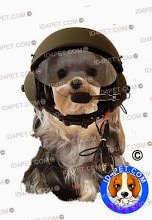
The Americans with Disabilities Act of 1990 (ADA) allows for Service dogs and emotional support animals to travel in the cabin of the aircraft as long as the dog does NOT obstruct an aisle or any other area used for emergency evacuations.

Although general in-flight rules will always be enforced by every airline company, the processes of actually making reservations, passing the ticket counter, luggage check in, security checkpoint, and gate may vary slightly, depending on the airline and airport. By reviewing the websites for individual airlines, you'll learn most of their guidelines, including that all request and require service dog and ESA identification and identifying apparel.

What To Expect At the Airport
• Flying with a service animal or ESA for the first time can be very anxiety producing, but in reality, the experience is actually easy and low-stress for prepared handlers. It is a very good idea to contact the airlines or consult their website a week or more before the flight (or at the time tickets are purchased) to find out what the requirements are for flying with a service animal or ESA. Most airlines now require advance notification and some, like Frontier and Midwest Airlines require special forms to be completed, in addition to the letter of prescription.
• At the airport and on the plane, the animal should wear an easy identification photo ID tag attached to the leash or harness. All airlines strongly encourage this because it makes identifying your dog as a service dog or ESA much easier and will prevent unnecessary confrontations (this is also true for all other settings in which you may be accompanied by your dog).
• When you arrive at the ticket or baggage check-in counter, make sure the airline representative is aware of the service animal/ESA. Airline personnel have typically seen and managed many passengers with service animals, and have a specific process they must follow before a passenger with a service dog can proceed without delays.
• First, you'll be asked questions to determine if the animal is a working service dog or an ESA. If the animal is a working service dog, the airline representative will ask what task your dog is trained to perform for you because of your disability. You, as the passenger, must be able to provide credible verbal evidence at this point (that means you need to be prepared to convincingly tell airport personnel what task your dog performs specific to your disability.
• If the animal is an ESA (emotional support animal), then you must tell the airline representative that the dog is an ESA. You will be required to produce a formal letter of prescription for a service dog or ESA from a licensed mental health professional. A letter from your medical doctor will NOT be accepted, as the letter must be written by a licensed mental health professional (psychiatrist, psychologist, therapist, counselor, social worker). There is no way around this. In addition, it is becoming increasingly common for airlines to require you to submit a copy of this letter several days prior to the flight. Some airlines (Midwest and Frontier, for example) actually require you to have your therapist or licensed mental health professional complete one of their third party verification forms.
• Once you're on your way to the boarding gate, the next step is to pass through the security checkpoint. This is easy, and your dog may walk or be carried through the scanner with you, but the dog's leash, collar, harness, or anything else with metal in or on it must be removed prior to going through. So we highly recommend non-metal ID Badge/tag to eliminate the hassle. The Transportation Security Administration (TSA) officer may also ask about your dog, but it's just a formality.

• Having arrived at the boarding gate, it's a good idea to let the attending airline personnel know that you are being accompanied by your service dog or ESA, although it isn't required. Often, they will allow you to board first and be seated ahead of others out of convenience for you, as well as other passengers.
• Once you have boarded the aircraft, most airline policies state that your dog must be on the floor between your knees and the seat in front of you. Most of the time, however, flight attendants rarely seem to mind if small a service dog or ESA sits on your lap.
ID4Pet wish you a pleasant flight.
Source: AAA ebook
ADA